FERC Kicks off a Transparency Wave on Large Load Interconnection
Cat herding, signaling, and tons of hard work between now and forever!

Juy 1, 2026 Update: Watch Neil, Arushi, Joseph, and Arthur - at the CSIS Energy & Climate Change Program
Original Article:
Snapshot: FERC started six regional countdown clocks, while offering a narrow 45-day window for each RTO/ISO to request a temporary abeyance if it can show a concrete path to a Section 205 tariff filing. This is both a warning shot and an invitation: fix your tariff yourself, fast, or litigate why FERC should not fix it for you. The article below covers the Open Meeting announcement of the six show-cause order dockets, and covers the one we’ve seen released in detail thus far, applicable to MISO, in Docket No. EL26-70-000.
At its June 18, 2026 open meeting, FERC announced six new show-cause dockets directed at the RTOs and ISOs under its jurisdiction. The Chair described the action as a suite of six orders, each tailored to a specific grid operator, finding that existing tariffs appear to be unjust and unreasonable because they do not adequately address how to integrate large and co-located loads onto the transmission system. The stated objectives were familiar but unusually concentrated in one package: fair cost allocation, transparency for ratepayers, respect for states’ rights, efficient markets, reliable service, and speed to power.
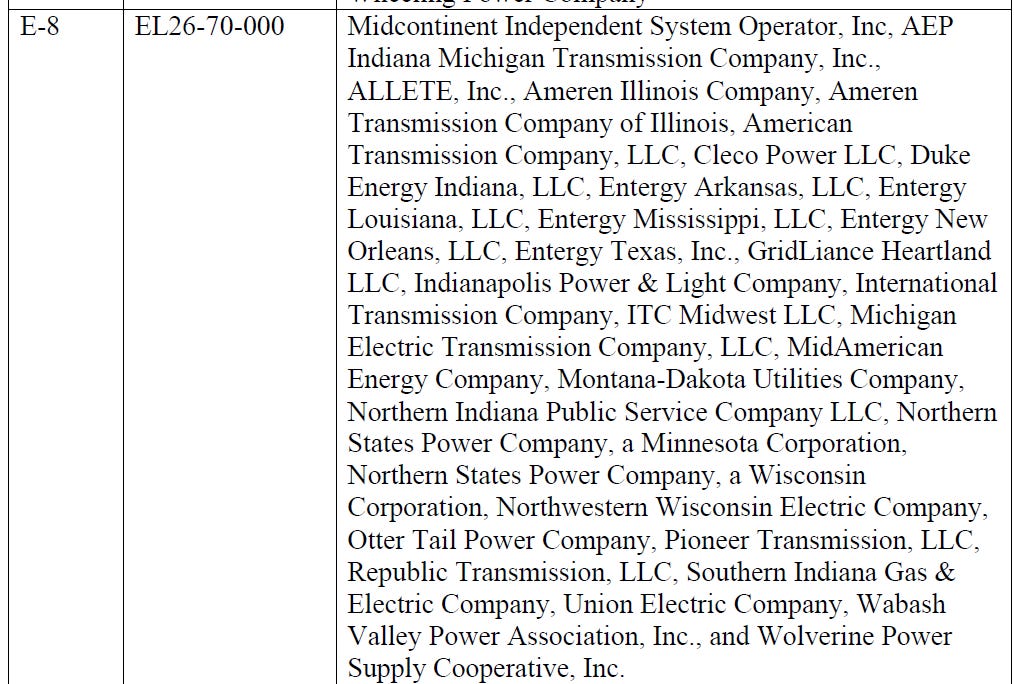
The first order we have in hand is the MISO order, Docket No. EL26-70-000. It is important because it shows the architecture of what FERC is now asking across the country.
First of all, being a FERC lawyer provides one lifelong interpretive superpowers. I am a recovering but active FERC lawyer and this superpower is my gift to you!
It’s important to note FERC did not issue to MISO any kind of replacement to its existing tariff. It is not fast action, it is not ERCOT writing PGRRs and NPRRs and they turn into tariff seemingly overnight with one PUC Texas vote. It is a Federal Power Act Section 206 show-cause order. FERC is telling MISO and its transmission owners: either explain why the existing tariff remains just and reasonable without these provisions, or explain what tariff changes would fix the problem if FERC ultimately finds the tariff unjust and unreasonable.
The order gives MISO and the transmission owners 60 days to respond, directs MISO to file a 30-day informational report on adequate generation to serve existing and new large loads, and allows interested parties to respond within 30 days after MISO’s filing. There is also an escape valve built into this mode of compliance. Chairman Swett emphasized that the orders “leave room for and encourage” filings under FPA sections 205 and 206 that address the concerns identified in the show-cause orders. She then explained that FERC will consider requests to hold all or part of a show-cause proceeding in abeyance if they are filed within 45 days and include enough detail about a plan to finalize and file a Section 205 proposal addressing the identified issues.
That is not a minor procedural footnote. It means the RTOs and ISOs have two paths. They can answer the 60-day show-cause order directly, defending their existing tariffs or proposing what a replacement tariff should look like. Or, within 45 days, they can ask FERC to pause all or part of the Section 206 proceeding so they can work through stakeholder processes and bring forward their own Section 205 tariff filing.
But the abeyance option is deliberately constrained. In the MISO order, FERC says any abeyance would run for up to 90 days, would begin as of the deadline to respond to the order, and would be considered only to give MISO and the transmission owners time to develop Section 205 filings that address the issues raised in the show-cause order. FERC also says it will not grant abeyances reflexively, will look with “great disfavor” on extension requests, and expects any successful request to include both a robust description of the future Section 205 filing and a specific explanation of when that filing will be made.
So the abeyance process is best understood as a structured off-ramp, not a slow-walk option. FERC is giving each region a chance to solve the problem itself, using its own stakeholder processes and regional tariff design. But the Commission is also preserving pressure: 45 days to ask for the pause, 60 days as the baseline response deadline, 90 days maximum for abeyance, and skepticism toward extensions.
That is FERC telling the markets: innovate regionally, but do not stall.
What FERC is actually asking for
The Chair previewed five categories of reform. The MISO order tracks them closely.
First, FERC wants clear application, study, and operational rules for transmission customers serving large loads. The MISO order says MISO’s tariff appears unjust and unreasonable without provisions addressing the application process, study procedures, and ongoing operational requirements for Eligible Customers seeking transmission service on behalf of large loads.
Second, FERC wants cost-shift protection and better transparency into Network Upgrade costs. So, the MISO order preliminarily finds that the tariff appears unjust and unreasonable because it lacks adequate mechanisms to mitigate cost shifting among transmission customers. It points to two missing pieces: public, systematic information about Network Upgrade costs needed to serve large loads, and a pro forma cost recovery agreement among MISO, the relevant transmission owner, and the Eligible Customer taking service for the large load.
Commissioner Rosner put that point in plain English at the meeting today: if new transmission infrastructure is built to serve a data center and that data center does not show up, other customers should not be left holding the bag. Those agreements are supposed to address stranded-cost risk and timing gaps before the large load actually energizes, with payments credited back toward transmission revenue requirements rather than simply protecting utility recovery.
Third, FERC wants clear tariff rules for co-location and behind-the-meter generation. The MISO order says the tariff appears unjust and unreasonable because it lacks clear provisions addressing the rates, terms, and conditions for co-location arrangements and for Eligible Customers taking transmission service on behalf of co-located load or load with behind-the-meter generation. This is an area where other ISO/RTO orders are going to look different - e.g., SPP is further along than MISO by a bit!
Fourth, FERC wants transmission services that recognize flexibility. This is the heart of the “speed to power” theory. The MISO order says the tariff appears unjust and unreasonable because it does not include transmission services for flexible large loads that are willing and able to limit their use of the transmission system under certain conditions. The order points to interim service while Network Upgrades are built, and permanent firm and non-firm contract-demand-style services, with necessary control technologies or protection systems to keep withdrawals within approved levels.
Recalling Chairman Swett’s comments from earlier today, FERC also walked back an important piece of its December PJM co-location ruling: it set aside the prior finding that loads with behind-the-meter generation could not take the new PJM transmission services. That matters because the MISO order now carries that openness into the broader show-cause framework. It treats behind-the-meter generation and co-located load as part of the same tariff-clarity problem, and asks whether MISO’s tariff remains just and reasonable without PJM-style transmission service options for customers whose load can be limited to an approved level.
As of today’s announcements, FERC has reopened the door to BTM configurations, and is now asking each RTO/ISO to explain, region by region, how its tariff will accommodate co-location, behind-the-meter generation, and flexible large-load service without unnecessary transmission buildout.
Fifth, FERC wants a pathway for generation serving electrically proximate or co-located load to be studied in a way that reflects that operational reality. The MISO order similarly asks whether MISO’s tariff is unjust and unreasonable because it lacks provisions allowing an interconnection customer serving electrically proximate large load or large co-located load to seek generator interconnection service that reflects the operational dynamics of serving those loads. (The Chairman said this morning, this should prevent unnecessary and expensive transmission buildout.)
The overlooked piece: alternative transmission technologies
There is another important thread in the MISO order that should not be lost.
FERC is not only asking whether MISO has large-load study rules. It is asking whether those studies must evaluate alternative transmission technologies — technologies the order also describes as grid-enhancing technologies — before defaulting to traditional Network Upgrades. The order specifically asks whether MISO’s tariff remains just and reasonable without requiring evaluation of these technologies using models capable of accurately accounting for them, and without requiring an explanation when traditional Network Upgrades are selected instead.
That connects directly to the meeting happenings from this morning. Commissioner Rosner emphasized that grid-enhancing technologies can help get more out of the existing grid, save consumers money, and connect projects faster. His framing was blunt: the cheapest transmission line is the one that already exists.
The jurisdictional bargain
FERC is also drawing a careful jurisdictional line.
The Chair stressed that interstate transmission rates and generator interconnection processes are within FERC’s jurisdiction, while states retain authority over resource siting, retail sales, and retail rate design. FERC’s role here is to prevent cost shifting among transmission customers. States must handle cost shifting among retail customers. That is why the transparency piece matters: FERC is trying to expose wholesale transmission costs so state regulators can decide how those costs should be allocated at retail.
That is the actual policy bargain. FERC is not telling states how to design large-load tariffs. It is creating the wholesale-side visibility and transmission-service machinery that states can then use.
Existing deals are not supposed to be blown up
One more point matters for market participants already in motion.
The Chair emphasized this mornign that the orders are not intended to disrupt existing commercial agreements or agreements already being negotiated. The MISO order says the same thing: this proceeding is intended to establish prospective reforms, with reasonable implementation periods and reasonable time to finalize agreements nearing completion when tariff revisions are filed. That language was reiterated by Chairman Swett this morning: these efforts are intended to avoid regulatory chilling effects and are prospective by design.
A time-consuming but transparency-driven national grid policy reset
This is the beginning of a national large-load tariff reset.
The MISO order shows the template even as details around the ironclad priorities will necessarily vary: clear study processes, cost-shift protection, Network Upgrade transparency, co-location rules, flexible-load transmission service, electrically proximate generation/load study pathways, alternative transmission technology review, and adequate-generation reporting.
The broader message from the meeting is that the Commission is not done. The transcript says the six show-cause orders are region-specific, that they leave room for Section 205 filings, that requests for abeyance may be considered within 45 days, and that the ANOPR docket remains open for further potential action beyond the RTO/ISO regions.
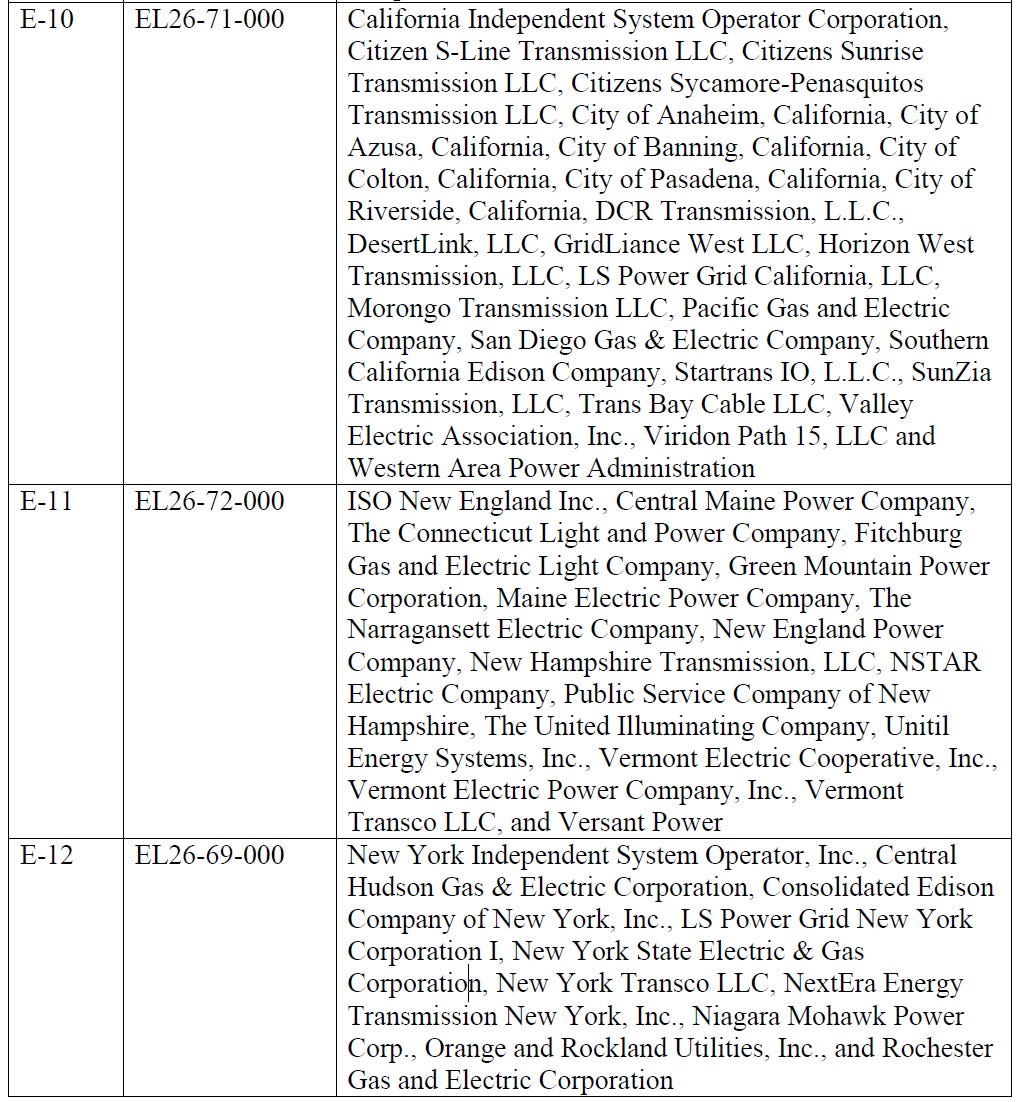
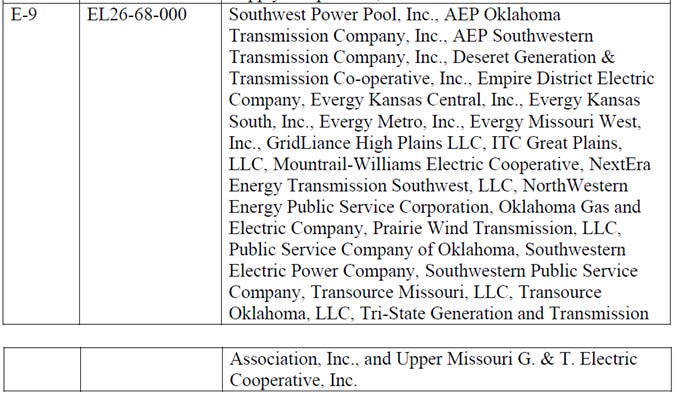
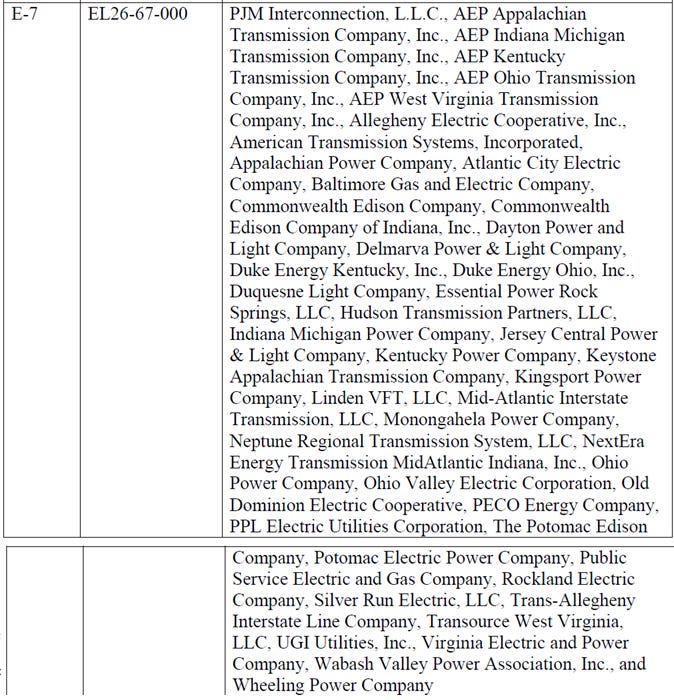
More orders, more filings, and more regional tariff fights are coming. The abeyance requests can be filed by any jurisdictional Transmission Owner, not just the RTO subject to the show-cause. If you need a list of who’s who, it’s in the appendix chart.** Enjoy!
Bring us more subscribers, too!
A.S.F.
***The abeyance off-ramp is principally for the RTO/ISO and relevant transmission owners — the entities with the tariff filing rights and the ability to work through stakeholder processes toward a Section 205 filing. Other interested entities can intervene and respond to MISO’s and the Transmission Owners’ filings, but the MISO order does not appear to invite non-RTO/TO parties to independently request abeyance.)
THAT’S A LOT OF TOS AND A LOT OF NONPUBLIC COMPANIES